Fairfax Homeowners: Why That Breaker Keeps Tripping in the Kitchen
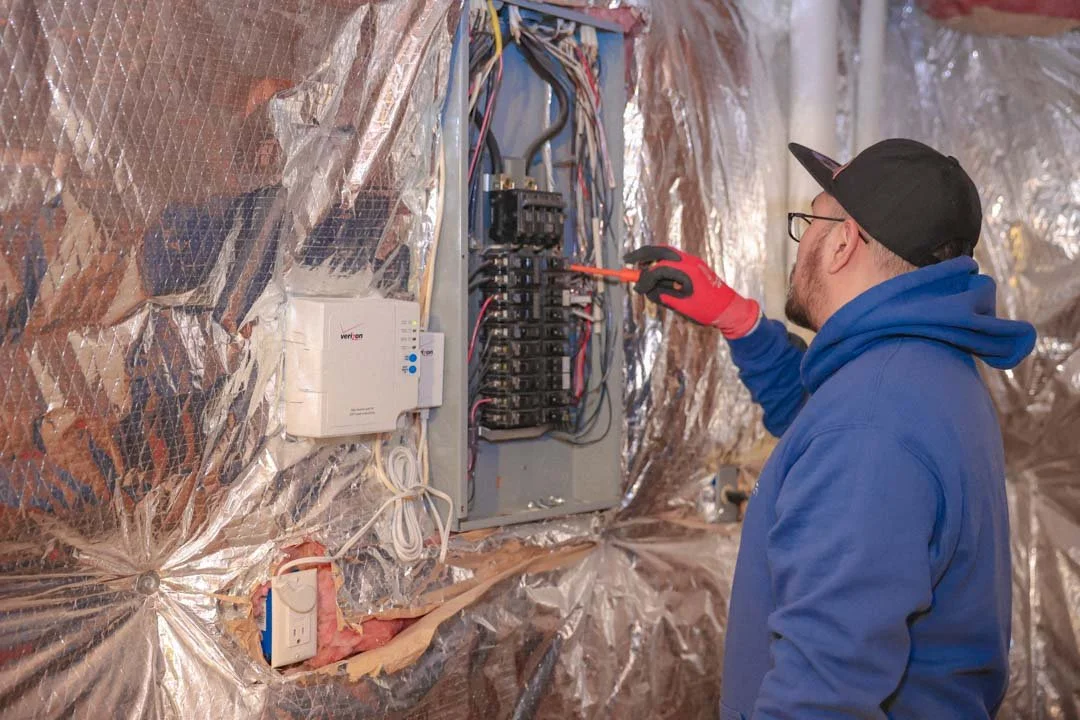
You are mid-morning, coffee is brewing, the microwave is running, and the toaster just went on. The breaker trips, and now you are standing in a dark kitchen, hitting reset for the third time this week. It is annoying, it is disruptive, and it keeps happening because the kitchen wiring in most Fairfax, VA, homes was designed decades before anyone imagined a counter with a coffee maker, an air fryer, an electric kettle, a toaster oven, and a microwave all drawing power at the same time. That single tripped breaker is not a fluke. It is a signal that the circuit is being asked to carry more than it was built to handle.
The consequences of ignoring a repeatedly tripped breaker go beyond inconvenience. When a circuit is consistently overloaded, the wiring and the breaker itself experience repeated thermal stress. Over time, connections loosen, insulation weakens, and the breaker may lose its ability to trip at the correct threshold. A breaker that no longer trips reliably is far more dangerous than one that trips too easily, because the protection it provides has been compromised. In Fairfax, VA, kitchens with aging electrical systems and modern appliance loads pose a real risk that warrants attention before a nuisance becomes a hazard.
Why Kitchen Circuits Weren't Built for Today's Appliances
Most kitchens in homes built before the mid-1990s were wired with one or two general-purpose 20-amp circuits shared across all counter outlets. That setup was reasonable for the era's appliances, which were lighter in draw and fewer in number. A coffee maker from 1985 drew about 600 watts. A modern high-end coffee maker or espresso machine can draw over 1,500 watts. An air fryer running at full heat draws 1,700 watts or more. When two or three of these devices run simultaneously on a single 20-amp circuit, you are at or over the circuit's safe capacity, and the breaker trips because that is exactly what it is supposed to do. The problem is not the breaker. The problem is that the circuit was not designed for how kitchens are actually used in 2025.
The National Electrical Code now requires at least two small appliance circuits in a kitchen, each dedicated to counter-level outlets, and separate dedicated circuits for the refrigerator, dishwasher, garbage disposal, and any built-in high-draw appliances. Homes that were built to older code versions may not have these separations in place. A kitchen that routes everything through one or two shared circuits is not only inconvenient but also out of step with modern wiring standards. For homeowners in Fairfax, VA, renovating, remodeling, or simply dealing with persistent tripping, upgrading to a properly separated circuit layout is often the right fix.
What a Dedicated Circuit Actually Means
A dedicated circuit runs from the breaker panel directly to a specific outlet or appliance, with no other devices drawing from it. This is different from a shared circuit, where a single breaker feeds multiple outlets in a room, and all of the devices plugged into those outlets compete for the same amperage. When a high-draw appliance like a microwave, refrigerator, or induction cooktop has a dedicated circuit, it can draw its full rated amperage without competing with other appliances on the same circuit. Fairfax, VA, electricians see this most often when a homeowner installs a new appliance and immediately begins experiencing tripping that did not happen with the older, lower-draw appliance it replaced.
Dedicated circuits also make diagnosis easier. When a shared circuit trips, it could be any combination of devices on that circuit that pushed it over the limit. When a dedicated circuit trips, you know immediately that the single appliance on that circuit is either drawing more than the circuit was rated for or has developed an internal fault. For a refrigerator, for example, a dedicated 20-amp circuit means that a compressor kick-on, which draws a surge of current to start the motor, does not also cause the microwave or the coffee maker to lose power. The separation keeps appliances from interfering with each other and gives each one the stable, full-capacity power it needs to run correctly.
The Specific Appliances That Need Their Own Circuits
The current electrical code and practical wiring standards require dedicated circuits for specific kitchen appliances. The refrigerator gets a dedicated 20-amp circuit. The dishwasher gets a dedicated 20-amp circuit. The garbage disposal gets a dedicated 20-amp circuit. The microwave, whether built-in or over-the-range, gets a dedicated 20-amp circuit. An electric range or cooktop gets a dedicated 240-volt circuit rated at 40 or 50 amps, depending on the unit. A wall oven, if separate from the cooktop, gets its own 240-volt dedicated circuit. On top of that, the kitchen needs at least two 20-amp small appliance circuits feeding the counter outlets, and in most modern kitchens, more than two is the practical reality. Each of these circuits runs back to its own breaker in the panel.
For Fairfax, VA, kitchens that were not wired to this standard, adding these circuits typically means running new wire from the panel to the kitchen, which may involve routing through walls, crawl spaces, or basements, depending on the home's construction. In some cases, the main panel also needs to be evaluated to confirm it has available breaker slots and sufficient overall capacity to support the added circuits. Homes with older 100-amp service panels that are already heavily loaded may need a service upgrade in conjunction with the kitchen circuit work. Rojas Electric assesses both the kitchen layout and the panel condition before quoting any circuit addition project, because the two are often directly connected.
When a Tripped Breaker Is Telling You More Than One Thing
A breaker that trips in the kitchen is not always just an overload signal. Sometimes the trip is caused by a fault in a specific appliance, a failing outlet, or a wiring issue in the circuit itself. If a breaker trips and then holds normally after you reset it and unplug a specific device, that device is likely the cause. If the breaker trips as soon as you reset it with nothing plugged in, the circuit itself has a problem that needs to be diagnosed. If the breaker trips repeatedly with a normal load and no obvious single cause, the circuit is overloaded. Each of these scenarios points to a different fix, and confusing them leads to the wrong response.
In Fairfax, VA, homes with older wiring face an additional concern: the condition of the wiring and connections over time. Aluminum wiring used in some homes from the late 1960s through the 1970s requires specific outlet types and connection methods to remain safe, and it can cause tripping and overheating if those requirements are not met. Older copper wiring with degraded insulation or loose connections at outlet boxes can also cause intermittent tripping that appears to be an overload but is actually a fault. When a kitchen circuit has been tripping for a long time, and the cause is not obvious, having a licensed electrician trace the circuit and inspect connections and wiring condition is the right starting point, not just adding a bigger breaker or resetting and hoping.
FAQs
-
If the breaker trips when multiple appliances are running but holds when you reduce the load, you likely have an overloaded shared circuit. If the breaker trips immediately after reset with nothing plugged in, there is a wiring fault. If it trips inconsistently under normal loads, it could be a loose connection, a failing breaker, or a marginal overload. A licensed electrician can trace the circuit and identify which scenario applies.
-
No. Replacing a 20-amp breaker with a 30-amp breaker does not increase the capacity of the wiring. It removes a protection device from wiring that was only rated to handle 20 amps safely. If the wiring overheats, the larger breaker will not trip when it should, which is how wiring fires start. The fix is to add circuits or redistribute the load, not to override the breaker.
-
A fully code-compliant modern kitchen needs a minimum of two small appliance circuits for counter outlets, plus dedicated circuits for the refrigerator, dishwasher, garbage disposal, microwave, and any 240-volt cooking appliances. In practice, most updated kitchens have 6 to 8 circuits in total. Kitchens with induction cooktops, warming drawers, or other built-in appliances may need more.
-
Yes. Adding new circuits in Fairfax, VA, requires an electrical permit, and the work needs to pass inspection. This applies to both the circuit wiring and any panel modifications made to accommodate the new breakers. Permitted work protects you and ensures the installation complies with current code requirements.
-
It depends on how many available slots your panel has and on its overall service capacity. Many older panels in Fairfax, VA, homes are either full or nearing capacity. If your panel can accommodate the additional breakers, no upgrade is needed. If it cannot, a panel upgrade or a subpanel installation may be required before the new kitchen circuits can be added.