Fairfax Panel Running Out of Breaker Slots? Here's What Happens Next
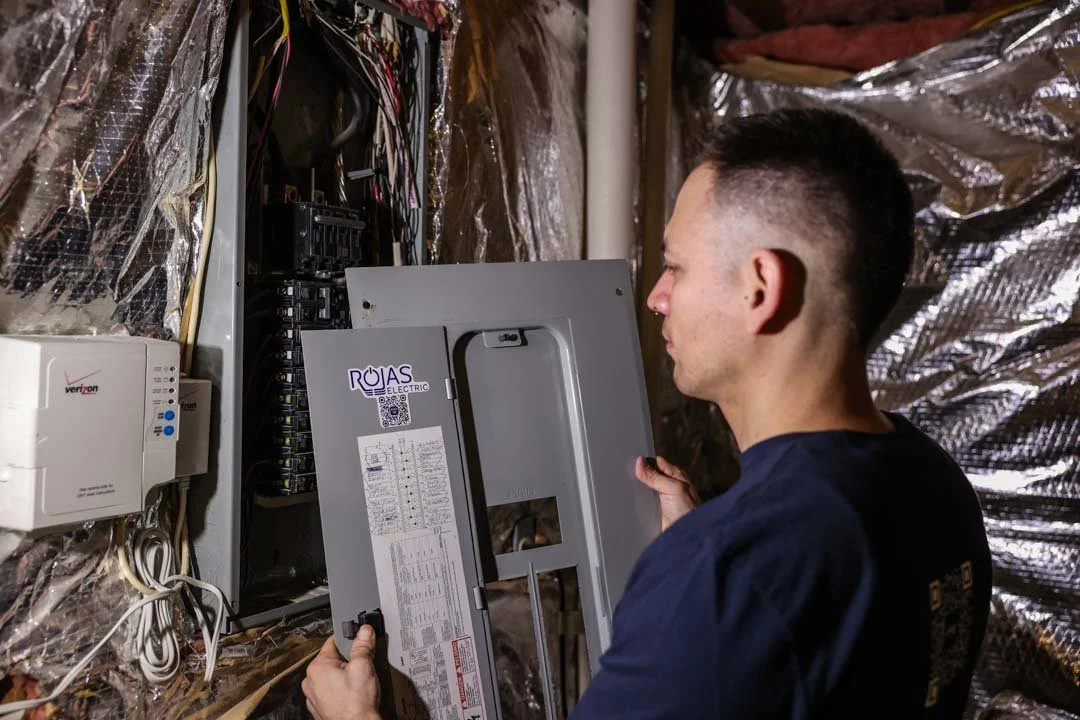
You need to add a circuit. Maybe it is for a new EV charger, a workshop in the garage, or a dedicated line for the home office that keeps tripping the shared bedroom circuit. You open the panel, and there is not a single open slot. Every space is taken, and someone at some point already installed tandem breakers to squeeze extra circuits in. So now the question is what to do next, and the answer your panel is giving you is not a comfortable one. A panel without room is not just a capacity problem. In Fairfax, VA, homes where panels were sized for a simpler era of electrical use, a full panel is often the first visible sign that the entire electrical service needs to be rethought.
The instinct when a panel is full is to find the cheapest workaround. Tandem breakers, also called slimline or twin breakers, are the most common ones. They fit two breakers into a single slot space and allow extra circuits without replacing the panel. The problem is that not every panel slot is rated for tandem breakers, and many homeowners and even some contractors install them without checking the panel directory. A tandem breaker installed in a slot not rated for it is a code violation. Beyond the code issue, a panel that has been filled to capacity through creative stacking is not a panel that was designed for that load, and the combination of overloaded bus bars, loose wiring, and degraded connections that tends to accumulate in heavily used older panels creates conditions that go well beyond inconvenience.
What Tandem Breakers Are and When They Are Permitted
A tandem breaker is a single-slot device that contains two independent breaker mechanisms side by side, each protecting its own circuit. They are a legitimate product used in panels specifically designed to accommodate them. The panel's load center directory, which is the label on the inside of the panel door, identifies which slots are rated for tandem breakers and which are not. Panels that accept tandems in certain positions are called tandem-capable panels, and the directory specifies exactly which positions allow double-stacking. Using a tandem breaker in a slot that the panel manufacturer does not list as tandem-capable overrides the panel's tested configuration, which is what UL listing and code compliance are based on.
In Fairfax, VA, homes with panels from the 1970s through the 1990s, the tandem breaker situation is frequently more complicated than it appears. Some panels have had their original breakers replaced over the years with tandems from different manufacturers that are not compatible with the panel bus, which creates loose or intermittent connections at the contact points. Some panels have tandems installed in every available slot regardless of whether the position is rated for them, simply because the installer needed more circuits and did not consult the panel directory. When a licensed electrician opens a panel like this and sees a mismatched collection of breakers crammed into every available space, the assessment is not about finding one more slot. It is about whether the panel itself has any remaining service life or whether replacement is the more practical path.
What a Full Panel Signals About the Home's Electrical System
A panel that has been filled to capacity is not just a wiring logistics problem. It is usually a signal that the home's electrical service has not kept pace with how the home is actually being used. Most Fairfax, VA, homes built before 1990 were served by 100-amp or 150-amp panels that were sized for the electrical loads typical of that era. Those homes now commonly have central air conditioning, electric water heaters, refrigerators with compressors, dishwashers, multiple televisions, gaming systems, home office equipment, and potentially EV chargers or other high-draw loads that were not part of the original electrical planning. A 100-amp panel that is full of tandem breakers is not a panel that was designed to manage all of that. It is a panel that has been improvised into service past its intended scope.
The physical consequences of running an older, full panel at sustained high load are not always immediately visible. Heat buildup at the main buss bar, arcing at connection points where breakers have loosened from years of thermal cycling, and degraded insulation on wiring that enters the panel from circuits that run consistently near their rated capacity are all conditions that develop over time and are not apparent from outside the panel enclosure. Fairfax, VA, homeowners who have never had their panel inspected, who bought a home with an older panel and never opened it, or who have been adding circuits through tandem breakers for years, are often genuinely surprised by the condition of the panel interior when an electrician opens it for the first time in a decade or more.
When Panel Replacement Is the Only Practical Answer
The decision to replace a panel rather than add to it comes down to a few factors that an electrician evaluates during an inspection. The first is whether the panel has any legitimate remaining capacity for the circuits being requested. A panel with no code-compliant available slots and no tandem-capable positions remaining has no room to grow without replacement. The second is the condition of the existing wiring and connections inside the panel. Panels with corroded bus bars, discolored terminal blocks, burnt insulation, or breakers that have been repeatedly tripped and reset over years of overloading are panels where the hardware has been compromised and where ongoing repairs rather than replacement become the less cost-effective path over time.
The third factor is the overall service rating relative to the home's actual load. A load calculation performed by a licensed electrician compares the panel's rated service capacity against the combined demand of all the circuits in the home. For homes where the calculated load approaches or exceeds the service rating, the panel replacement is typically part of a broader service upgrade that also involves increasing the service entrance capacity from the utility and updating the meter base. Rojas Electric performs load calculations as part of any panel evaluation in Fairfax, VA, because the right recommendation depends on understanding the full picture of what the panel is being asked to carry, not just counting the empty slots.
What Panel Installation Actually Involves
Installing a new electrical panel in a Fairfax, VA, home is a full-day project that involves considerably more than swapping one box for another. The existing panel is de-energized after coordinating with the utility, which may require a scheduled disconnect depending on the home's meter and service entrance configuration. The existing wiring is carefully documented and labeled before removal, and each circuit is connected to a correctly rated breaker in the new panel. New panels are installed with the correct clearances, grounding, and bonding per current NEC requirements, and labeled circuit directories. For service upgrades that accompany panel replacement, the service entrance conductors between the utility and the panel may also be replaced as part of the same project.
After installation, the work is inspected by Fairfax County before the panel is energized and put back into service. The inspection confirms that the installation meets current code requirements for grounding, bonding, breaker ratings, wiring methods, and clearance. Permits for panel work are required in Fairfax, VA, and the permit process protects homeowners by creating a documented, inspected record of the installation. Panel replacements done without permits leave the homeowner with no inspection record, which creates complications during home sales, insurance renewals, and future electrical work that requires permits. Rojas Electric pulls permits for every panel project, coordinates with the utility when required, and sees the project through inspection as a standard part of how we deliver this work.
FAQs
-
Open the panel door and look at the load center directory, which is the label listing circuit positions. Count the positions that are genuinely empty versus those using tandem breakers. Then check the directory to see which positions are rated for tandems.
-
Tandem breakers installed in slots specifically rated for them by the panel manufacturer are safe and code-compliant. Tandem breakers installed in slots not rated for them are a code violation and create a connection that was not part of the panel's tested design. The distinction is in the panel directory. If the directory does not list a slot as tandem-capable, a tandem breaker in that position is not a legitimate solution, regardless of whether it physically fits.
-
A straightforward panel replacement in a Fairfax, VA, home with a well-organized existing panel and no service upgrade required typically takes one full day from disconnect to re-energization. Projects that include a service upgrade, require significant re-wiring inside the panel, or involve unusual configurations can take longer. A utility disconnect and reconnect schedule also affects the timeline when the utility needs to be involved in the process.
-
Yes. Panel replacement is a permitted electrical project in Fairfax, VA, and the work must be inspected by the county before the panel is put back into service. The permit and inspection are not optional, and unlicensed panel work without a permit creates liability issues for the homeowner and can affect insurance coverage and home sale transactions.
-
In some situations, yes. If the main panel has remaining service capacity but simply lacks available breaker slots, a subpanel fed by a single large circuit from the main panel can distribute additional circuits without replacing the main. This works when the main panel's overall condition is sound, the service rating supports the added load, and at least one slot is available for the feeder breaker.