What a Smart Panel Does That Your Current Breaker Box Simply Cannot
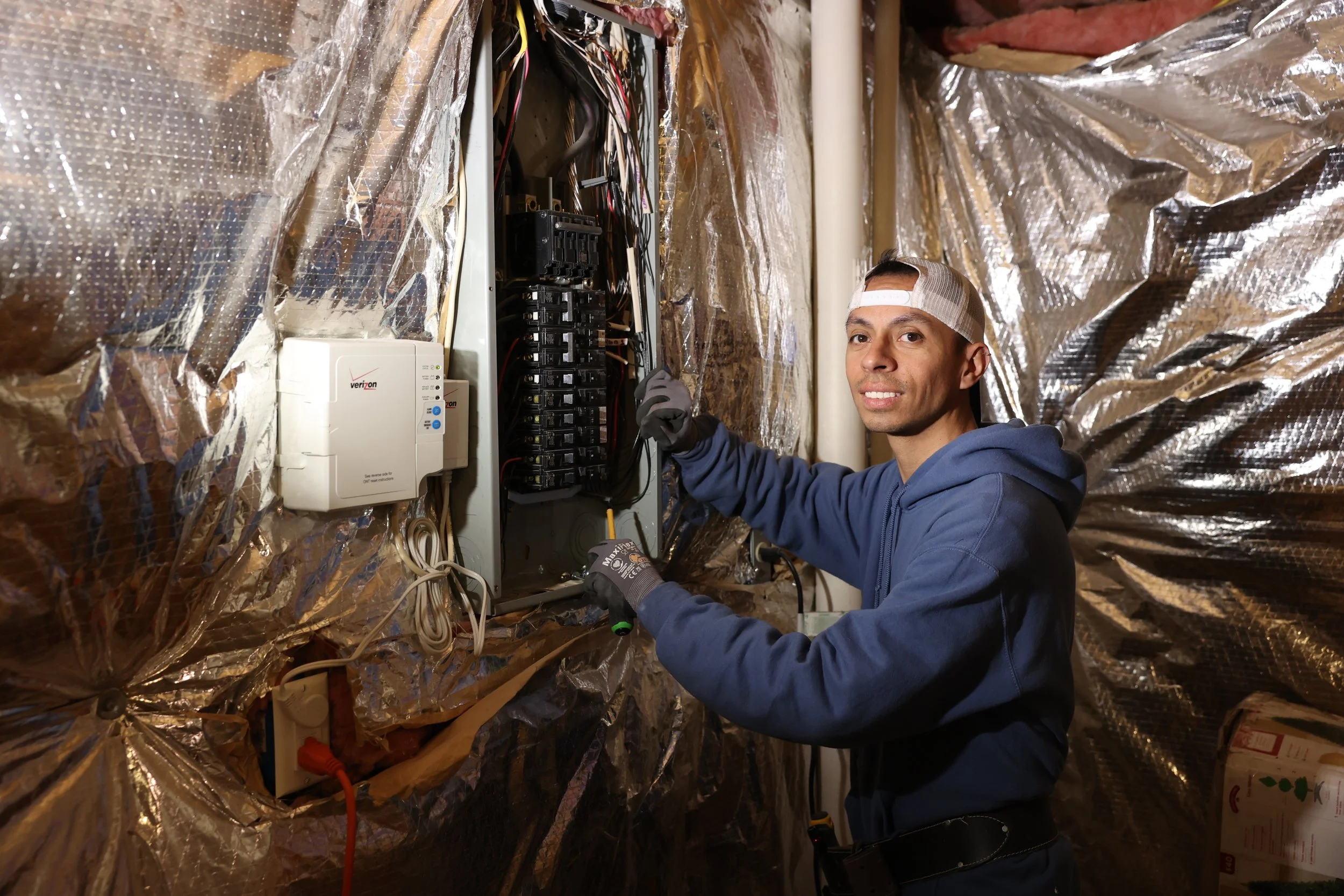
Your current electrical panel does one thing: it distributes power to circuits and trips a breaker when something goes wrong. It does not know how much power each circuit is using. It does not know when your battery is running low during an outage. It cannot turn off the basement lights remotely, so the EV charger can run through the night without tripping the main. It has no app, no sensors, no intelligence, and no awareness of what is happening anywhere in your home's energy picture. A smart panel does all of those things, and for homes that are adding solar, battery backup, and electric vehicles into a single electrical system, the gap between what a conventional panel can manage and what a smart panel can manage is increasingly significant.
The residential energy picture has changed faster than the hardware most homes rely on to manage it. A conventional breaker box was designed to distribute power from a single source, the grid, to a home's circuits. It was not designed to manage the bidirectional flow of energy between a solar system, a home battery, an EV charger, and the grid simultaneously. The smart panel is the hardware that sits at the center of that modern energy ecosystem and actually coordinates it. For homes without solar or battery storage, the case for a smart panel is more about visibility and convenience than necessity. For homes that are building out a complete home energy system, the smart panel is closer to a core infrastructure decision.
How a Smart Panel Works Differently from a Conventional Panel
A smart panel combines the overcurrent protection hardware of a conventional panel with circuit-level current sensors and a connected controller. Each circuit position in the panel has a sensor measuring real-time current draw. The controller aggregates that data, connects to the home's network and to cloud services, and makes it available through a smartphone application that shows exactly what each circuit is consuming at any moment. This circuit-level visibility is something that whole-home energy monitors provide in a limited way through clip-on sensors at the main service conductors, but those devices measure total consumption rather than individual circuit activity, and they do not offer any control capability.
The control side of a smart panel is what separates it most clearly from any monitoring-only product. Smart panels allow individual circuits to be turned on or off remotely through the app, and they allow the homeowner to set rules for how the panel behaves under specific conditions. A rule might say that during a grid outage, the EV charger and the basement workshop circuit should be cut off automatically, keeping the battery's stored energy available for the kitchen, refrigerator, and primary living areas. Another rule might say that when the battery is below 20 percent, all non-critical circuits should shed load until the battery recovers from solar production. A conventional panel cannot execute any of these instructions. It passes power, or it does not.
The Energy Systems That Make a Smart Panel Most Valuable
A smart panel's advantages are clearest in homes that have two or more of the following: a home battery system, a rooftop solar array, an EV charger with significant amperage draw, and a desire to manage utility costs through time-of-use rate optimization. Each of these systems benefits individually from having more intelligence at the panel level, and when they exist together in one home, the smart panel becomes the coordinating layer that allows them to work as a system rather than as disconnected equipment that happens to share the same electrical service.
Home battery systems in particular benefit from smart panel integration. A battery system installed without a smart panel typically feeds a predetermined critical loads subpanel during outages, a fixed set of circuits that was chosen at installation time. When conditions change, when the battery is lower than expected, or a particular load is more critical on a given day, the homeowner has no way to adjust which circuits receive backup power without physically going to the panel. A smart panel changes that entirely, allowing real-time adjustment from anywhere with a phone connection. For homeowners who have invested in battery backup specifically for resilience during outages, the ability to actively manage how that battery energy is allocated is a meaningful upgrade over the fixed subpanel approach.
What Certified Smart Panel Installation Requires
Smart panels from manufacturers, including Span, require that installing electricians complete a certification process before they are authorized to perform installations. The certification exists because a smart panel installation is not complete at the point where the panel is mechanically installed, and the circuits are energized. Configuration of the panel's circuit labels, verification of connectivity to the home network and cloud services, integration with connected solar inverters and batteries, and testing of outage behavior are all required steps that a standard panel installation does not include. An electrician without specific training on the smart panel product being installed may execute the electrical work correctly and leave the homeowner with hardware that does not deliver any of the software-dependent features.
The integration step is particularly important and often the most overlooked. A smart panel that is connected to the app but not integrated with the home's solar inverter and battery system cannot provide the automated load management that justifies the investment for most buyers. The integration requires configuring communication protocols between the panel and the other energy hardware, which varies by manufacturer and sometimes requires firmware updates on the inverter or battery before the connection is stable. Certified installers from Rojas Electric are trained on these integration requirements and are expected to verify and test them before the installation is signed off. Homeowners evaluating installers for a smart panel project should ask specifically whether the installer is certified for the panel brand being installed and whether the scope of work includes full configuration and integration testing.
Is Your Home Ready for a Smart Panel?
Several factors determine whether a home can support a smart panel installation without additional upstream work. The first is service size: most smart panels are available in 200-amp configurations, and homes with 100-amp service need a service upgrade before a smart panel can be installed. The second is panel location and physical space: smart panels have specific dimensions and clearance requirements that differ from conventional panels, and the existing panel location needs to accommodate them. The third is network connectivity: smart panels require a Wi-Fi connection at the panel location or rely on a cellular connection through a built-in SIM, and panel locations in basements or garages with poor Wi-Fi coverage may need a network access point installed nearby.
For homes that are not yet at the point of adding solar or battery but are planning to in the future, installing a smart panel now as part of a panel upgrade or replacement project can be a forward-looking choice that avoids a second panel replacement when the energy systems arrive. For homes that have no near-term energy storage plans, the monitoring features of a smart panel provide value independently, but the cost difference relative to a conventional panel is harder to justify without the load management use case. A licensed electrician familiar with smart panel products can help homeowners evaluate where they are in that decision based on their specific setup and energy goals.
FAQs
-
Smart panels are designed to replace conventional panels. The installation involves removing the existing panel and installing the smart panel in its place, reconnecting all existing circuits to the new panel's breaker positions. It is a panel replacement project, not an add-on.
-
Integration compatibility varies by smart panel brand and by solar inverter and battery manufacturer. Span, for example, has documented integrations with specific inverter and battery brands, and the depth of integration varies by product. Before purchasing a smart panel, confirming that it supports your specific solar and battery equipment is an important step.
-
The panel's core electrical function, distributing power from whatever source is available, operates during an outage. If battery backup is integrated, the panel manages which circuits receive power from the battery based on pre-configured priorities or real-time user input through the app if cellular or local network connectivity is maintained.
-
Smart panels carry a premium over conventional panels, with the hardware cost representing the largest part of the difference. Installation costs are also higher because of the additional configuration and integration work involved. The total cost difference depends on the panel brand, the size of the installation, and whether a service upgrade or other ancillary work is part of the project.
-
Yes, in a limited way. Circuit-level monitoring through the smart panel app reveals which circuits are consuming the most power, which allows homeowners to identify high-draw devices or behaviors they may not have been aware of. In homes with time-of-use utility rates, the ability to see real-time consumption and shift discretionary loads away from peak-rate hours has a measurable bill impact.