
Federal Pacific or Zinsco Panel? The Breaker That Won't Trip
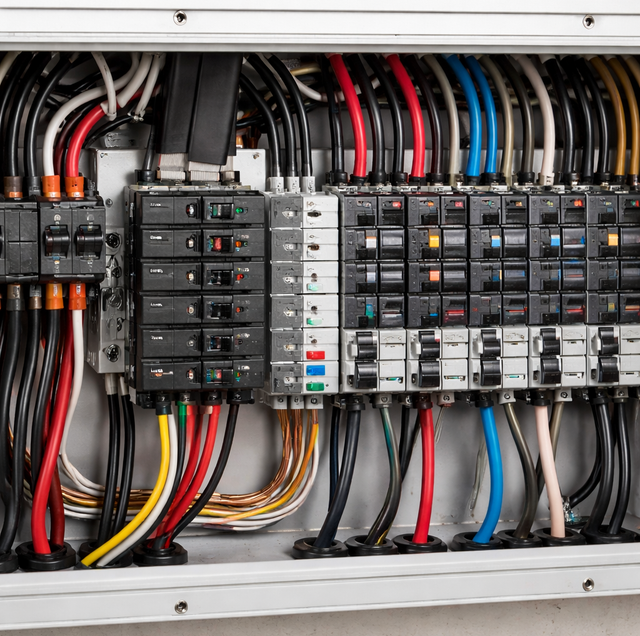
You are a few weeks into buying an older home, the offer accepted and the finish line in sight, when the inspector's report lands with a line highlighted near the electrical section. The main panel is a Federal Pacific, or maybe a Zinsco, and it is flagged for replacement. The house is otherwise sound. The lights work, the outlets work, nothing looks wrong behind that gray metal door. So the natural question is whether this is a real safety problem or an inspector being cautious with an old brand name.
It is a real one, and the reason is specific rather than vague. Both brands share a single flaw that matters more than almost anything else in the panel: the breakers can fail to do the one job they exist for.
What a Breaker Is Supposed to Do
A circuit breaker has one core duty. When the current on a circuit climbs past its rating (an overload), or when a hot wire touches a ground or a neutral (a short), the breaker is supposed to sense that surge of heat and current and snap the circuit off in a fraction of a second. That trip is the only thing standing between a fault and a wire hot enough to scorch its own insulation or ignite the framing around it.
Everything that worries inspectors about these two brands comes back to that action not happening. A panel can look perfectly ordinary and still have breakers that will not release when they are needed.
Federal Pacific Stab-Lok: Looks On, Doesn't Cut Power
Federal Pacific Electric sold Stab-Lok panels widely from the 1950s into the early 1980s, so they turn up constantly in homes of that era. The concern is the breaker mechanism itself. Independent testing over the years has found that a meaningful share of Stab-Lok breakers can fail to trip during an overload or a short. The handle sits at ON, the panel reads normal, but the internal parts do not release. Some are known to stay energized even after a person switches them off by hand.
When a breaker does not trip on an overload, nothing is left to interrupt the circuit. It keeps drawing current it was never sized to carry, the conductor and its insulation climb in temperature, and the failure point moves from a switch in the garage to the wiring inside the wall or the panel itself. A federal safety review looked into these breakers in the early 1980s, and the panels were never recalled, which is part of why so many are still quietly in service today.
Zinsco: Breakers That Melt Onto the Bus
Zinsco panels, also sold under the Sylvania and GTE-Sylvania names, reach the same dead end by a different route. Their breakers clip onto an aluminum bus bar, the metal spine inside the panel that distributes power to each breaker slot. Over time, the contact point can overheat, and the breaker can fuse or partially melt onto that bus. Once it is fused in place, it cannot move, which means it cannot trip and often cannot be switched off either.
The aluminum bus adds its own trouble. Aluminum corrodes, and pits where the breakers connect, and that corrosion builds electrical resistance right at the spot that is supposed to stay cool. More resistance means more heat, and the heat feeds back into the same joint. So a Zinsco panel can be running warm at its contacts long before anyone notices, and a fault that should cut power instantly instead keeps feeding a connection that is already hot.
How to Tell Which One You Have
You can often identify the brand yourself without touching anything live:
- Federal Pacific/Stab-Lok: The panel door or the label inside frequently reads "Federal Pacific Electric" or "FPE." The breakers usually carry a thin red strip or marking across the handle, and the word Stab-Lok may be molded into the plastic.
- Zinsco/Sylvania: The label may read Zinsco, GTE-Sylvania, or Sylvania. The breakers are often unusually colorful, blue, green, red, or a mix, which stands out against the uniform look of a modern panel.
Do not rely on breaker color alone. Panels were relabeled across decades, and some have a mix of original and replacement breakers, so a matching handle does not confirm a healthy panel. If the cover is off-limits or the label has faded, a licensed electrician can confirm the brand and the bus type in a few minutes.
Why a Breaker That Won't Trip Is the Real Hazard
This is the part worth sitting with. A panel with no reliable overcurrent protection is not obviously broken. It powers your lights, runs your dryer, and charges your devices day after day, looking completely normal on the wall. The danger stays invisible until the exact moment it matters: a space heater overloads a circuit, or a nail driven into a wall nicks a cable behind the drywall.
On a healthy panel, that moment is a click and a reset. On a compromised Stab-Lok or Zinsco, the protection may simply not engage, and the circuit keeps heating toward the one outcome breakers exist to prevent. That gap between "looks fine" and "protects nothing" is why an inspector flags the brand on sight instead of waiting for a symptom to appear.
If the panel is warm to the touch, buzzes, gives off a hot-plastic smell, or has a breaker that will not reset or switch off, stop using those circuits and call a licensed electrician promptly. Those are signs of a connection overheating right now, not something to keep an eye on.
Why You Can't Just Test Them and Move On
A reasonable next thought is to test the breakers and clear the panel if they pass. The trouble is that a breaker tripping correctly once does not prove it will trip next time, or on the particular overload that eventually happens. The failure is intermittent and tied to age, heat cycling, and the internal design, not a clean defect you can measure and sign off on. There is no field test that certifies one of these panels as dependable for the years ahead.
Swapping in different breakers does not close the gap either. New-old-stock or refurbished Stab-Lok and Zinsco breakers carry the same design that caused the concern, and on a Zinsco they still clip onto the same corroded aluminum bus. The bus and the breakers are the problem together, so treating one without the other leaves the risk in place.
The Standard Fix: A Full Panel Replacement
The recommendation electricians and inspectors converge on is a full panel replacement, sometimes called a panel swap. A licensed electrician removes the old enclosure, bus, and breakers, and installs a new panel with breakers from a current manufacturer, typically UL-listed and paired with modern overcurrent protection along with AFCI or GFCI protection where the circuit calls for it.
Because it is work on the service side of the home, a replacement generally involves a permit and an inspection, and if the service size or the meter base is changing at the same time, coordination with the utility. Many older homes get this done as a planned project rather than an emergency, and it is a natural moment to right-size a panel that was already tight, since a 100-amp panel from the 1970s is often short on space for today's loads. The point of the job is not a patch. The parts that fail are the parts being removed.
What a Flagged Panel Actually Means for You
A Federal Pacific or Zinsco label is not a reason to panic or to walk away from a house. It is a known quantity with a known solution. Plenty of these panels run for years without an incident, which is exactly what makes them easy to leave alone. The reason to act is not that failure is certain. It is that the single safety device the whole house depends on cannot be trusted to work, and there is no way to make it trustworthy short of replacing it. Unless you are seeing heat, hearing a buzz, or smelling hot plastic, treat it as a project to schedule rather than a fire to fight tonight.
Frequently Asked Questions
Beyond the red stripe on the handle, Stab-Lok breakers tend to look thinner and clip in with a distinctive single or double stab connection that modern breakers do not use. One catch: some FPE panels have had a few breakers swapped over the years, so you can find a modern-looking breaker sitting in a Stab-Lok panel. That does not make the panel safe, because the bus and the panel design are still original. Judge the panel, not one breaker.
Not evenly. In testing, the two-pole Stab-Lok breakers that feed 240-volt circuits such as a dryer or range showed higher failure rates than single-pole breakers, so a panel loaded with double breakers is a bigger concern. On the Zinsco side, the risk tracks with how corroded the aluminum bus has become, which tends to be worse in panels that have taken moisture or run hot for years. An electrician weighs the specific panel rather than the brand name alone.
It is tempting because it sounds cheaper, but it does not fix the core issue. On a Zinsco, the aluminum bus stays in place and keeps corroding, and replacement Stab-Lok breakers repeat the original design. A handful of manufacturers sell retrofit interiors meant to modernize the guts of certain older panels, but those are limited to specific models and an electrician has to confirm the panel is a candidate. In most cases, a clean replacement is the more reliable path.
Pushmatic panels, also sold under the Bulldog name, use push-button breakers instead of toggles and are a different mechanism, so they are not identical to Stab-Lok or Zinsco. Their main drawbacks are age, breakers that can trip slowly as the internals stiffen, and the near impossibility of finding quality replacement parts today. They are frequently replaced for those reasons, which is why they show up alongside the other two brands on inspection reports.
A straight swap of a residential panel is often a single-day job, with the home's power shut off for several hours while the old panel comes out and the new one goes in. If the service amperage or the meter base is changing too, the utility has to disconnect and reconnect the service, which adds scheduling around their availability plus the permit and inspection. Your electrician can sequence the outage so it lands at a workable time.
No, they are separate problems that happen to share the metal. Aluminum branch-circuit wiring, common in homes built in the late 1960s and 1970s, is a fire risk at the connections where it meets outlets and switches, and it is usually remediated with listed copper pigtails rather than a rewire. The aluminum bus in a Zinsco is inside the panel and is addressed by replacing the panel. A home of that vintage can have both, which is worth knowing before you assume one repair covers everything.
Have your panel brand confirmed before you worry — a licensed master electrician can identify a Federal Pacific, Zinsco, or Pushmatic panel and plan a safe replacement. Rojas Electric serves Fairfax and all of Northern Virginia. Call (703) 810-3693.
