
Why Half Your Outlets Suddenly Stopped Working
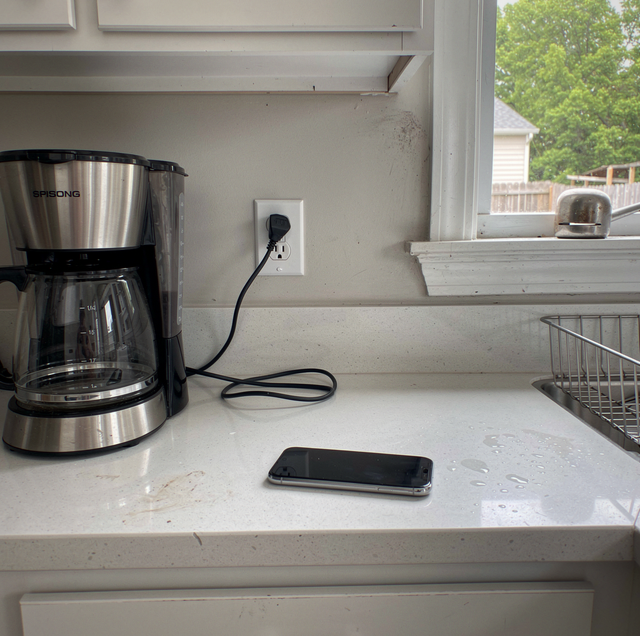
Plug in a lamp on the kitchen counter and nothing happens. Try the coffee maker on the same counter: also dead. Walk to the dining room, and that outlet works fine. That pattern, which outlets went dark and which didn't, isn't random noise; it's wiring topology showing itself, because outlets in a home are wired in groups that share a circuit, a breaker, and sometimes a single upstream GFCI device.
Before calling anyone, walk the house and note exactly which outlets are dead and which nearby outlets still work. That pattern is the single most useful piece of information you can give a technician, and it often narrows down the cause before a single tool is taken out.
Plug in a lamp on the kitchen counter and nothing happens. Try the coffee maker on the same counter: also dead. Walk to the dining room, and that outlet works fine. That pattern, which outlets went dark and which didn't, isn't random noise; it's wiring topology showing itself, because outlets in a home are wired in groups that share a circuit, a breaker, and sometimes a single upstream GFCI device.
Before calling anyone, walk the house and note exactly which outlets are dead and which nearby outlets still work. That pattern is the single most useful piece of information you can give a technician, and it often narrows down the cause before a single tool is taken out.
Match Your Pattern to the Likely Cause
| What you're seeing | Most likely cause | What's actually happening |
|---|---|---|
| One room dead, rest of house fine | Tripped breaker for that circuit | The breaker opened to protect the wiring from overload or a fault |
| Kitchen, bathroom, garage, or outdoor outlets dead, other rooms fine | Tripped GFCI outlet somewhere upstream | A single GFCI device protects every outlet wired after it on the same run |
| Scattered outlets across different rooms dead | Shared circuit wired in an unusual layout | Older homes often group outlets by wiring convenience, not by room |
| Everything dead including lights on that circuit | Breaker fully off or failed | The breaker tripped, was bumped off, or has failed internally |
| Outlets dead only when a specific appliance runs | Overloaded circuit tripping under load | The combined draw exceeds the breaker's rating |
| Outlets flicker before going dead | Loose connection heating up before failing | A degrading connection loses contact under thermal expansion |
Why a Single GFCI Can Take Down Outlets in Other Rooms
This is the pattern that surprises people most: a GFCI outlet in the garage or a bathroom trips, and suddenly outlets in the kitchen or on the back patio go dead too, even though nobody touched anything in those rooms. A GFCI outlet monitors for a ground fault and cuts power not just to itself but to every outlet wired downstream of it on the same circuit run, since electricians commonly wire one GFCI at the start of a run to protect every outlet after it without needing a GFCI device at each one. When finding and resetting that one upstream GFCI, look at the bathrooms, the garage, the kitchen, and any exterior outlet first; often, this restores everything at once.
Why a Tripped Breaker Takes Down a Whole Room or More
A circuit breaker protects the wiring behind it, not a specific room, and older homes, especially, were not always wired with one circuit per room. It is common to find a single 15- or 20-amp circuit feeding outlets in two adjoining rooms, or in a bedroom and a hallway, because that's how the original wiring run happened to be laid out. When that breaker trips, from an overloaded space heater, a hair dryer combined with other loads, or a genuine short, every outlet on that run goes dark together, regardless of which room they're physically in.
When It's Not a Breaker or a GFCI at All
If you've checked every breaker (all in the "on" position, none tripped to the middle) and reset every GFCI in the house and outlets are still dead, the cause has moved from something you can fix yourself to something that needs a professional. The most common culprits at this point:
A failed breaker that looks "on" but isn't actually passing power: Breakers age, and a breaker can fail in a way that leaves the switch handle in the "on" position while no longer making contact internally. This looks identical to "everything's fine" from the outside, which is why a technician tests the voltage at the breaker itself rather than relying on the handle position.
A loose connection at the panel or at a junction point: A screw terminal or a wire nut connection that has loosened over years of thermal cycling can lose contact entirely without any dramatic failure, silently cutting power to everything downstream of that specific splice.
A failed backstab connection inside an outlet: Many outlets installed with the quick "push-in" back-wire method, rather than screw terminals, rely on a small spring clip to hold the wire. Those clips can lose grip over time, especially under repeated load, and a single failed backstab partway through a daisy-chained run can take out every outlet wired after it, even though the outlets themselves look completely normal.
A shared neutral wire with a problem: Some older wiring, particularly in kitchens, uses a shared neutral between two circuits to save conductors. A problem with that shared neutral, a loose connection or a break, can cause unpredictable outages across outlets that appear to be on entirely different circuits, because they're actually sharing a return path. This layout, sometimes called a multi-wire branch circuit, was common in homes built before modern wiring conventions took over, and it means two "different" circuits on your panel schedule can actually fail together because they depend on the same neutral conductor to complete the loop back to the panel.
What You Can Safely Check Yourself
Check every breaker in the panel, including ones that look "on" but may be in a middle position that isn't fully reset; a fully tripped breaker often needs to be pushed firmly to "off" before it will reset to "on." Reset every GFCI outlet in the house, starting with bathrooms, the garage, the kitchen, and any outdoor outlet, by pressing the "reset" button, not just "test." Note whether any outlet felt warm before it died, and whether any breaker feels warm to the touch now, since either detail helps a technician narrow down the failure point before they even open the panel cover. If outlets are still dead after both of those checks, stop there. Opening an outlet or a junction box to look for a loose connection or a failed backstab means working inside live wiring, and that step belongs to a licensed electrician.
Frequently Asked Questions
Outlets on the same wall aren't necessarily on the same circuit or even the same daisy chain. Two outlets a few feet apart can be wired from opposite directions on entirely separate runs, so a failure partway down one run leaves the other completely unaffected even though they look identical side by side.
A single reset to check is reasonable. A breaker or GFCI that trips again immediately, or within seconds of resetting, is telling you there's an active fault on that circuit, not a nuisance trip, and repeatedly forcing it back on risks the outlet or breaker failing in a way that no longer protects the circuit at all.
Yes, a nearby lightning strike or a grid switching event can trip GFCIs and breakers across a home simultaneously by sending a voltage spike down the line, producing a pattern that looks like several unrelated circuits failed at once when the actual cause was a single event. It's also one of the situations where checking every GFCI and breaker in the house, not just the room with dead outlets, matters most.
A loose connection or a failing backstab tends to worsen with use rather than improve, since the mechanism, a slightly loose contact heating and cooling under load, gradually degrades the connection further each time current flows through it. An intermittent problem today is a common precursor to outlets that stop working completely, or in worse cases, to a connection that generates enough heat to damage the surrounding wiring insulation.
Not usually. A technician typically starts by testing for voltage at each outlet, moving along the circuit from the panel outward, which pinpoints the exact spot where power stops reaching the next outlet in the chain. That targeted approach means only the failed connection is opened, rather than every outlet on the run.
Sometimes. If dead-outlet patterns keep recurring across different circuits over time, rather than one isolated event, it can point to a panel-level issue: worn bus bar connections, an aging hazard-brand panel whose breakers aren't tripping cleanly, or general wear across a decades-old panel. A repeat pattern like that is worth a full panel assessment rather than chasing each outage circuit by circuit.
The panel already told you most of what you need to know before you ever picked up the phone: which breaker, which GFCI, which room. Bring that pattern to whoever answers the call, and the visit turns from a general troubleshooting appointment into someone confirming a specific suspicion and fixing it.
Call for a circuit diagnosis when outlets go dead in groups — get the exact connection traced and repaired instead of guessing room by room. Rojas Electric serves Fairfax and all of Northern Virginia. Call (703) 810-3693.
