
Can Your Panel Handle an EV Charger Without a Full Upgrade?
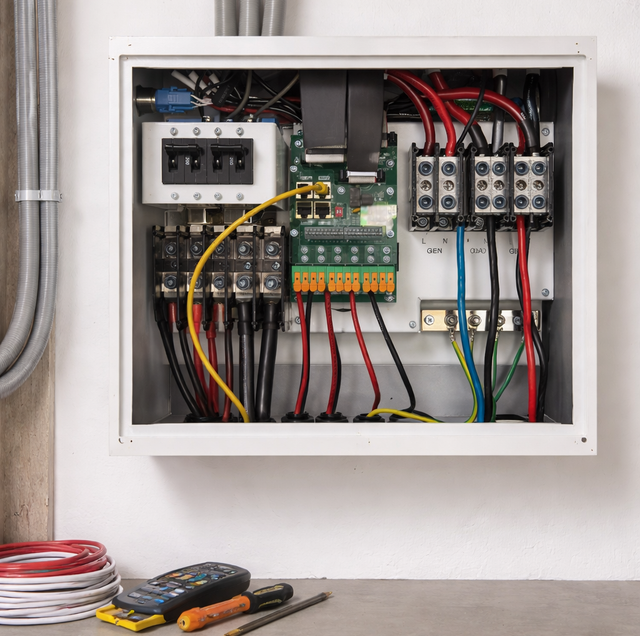
Adding a Level 2 charger rarely requires tearing out your panel for a bigger service, even though that is the first thing many people assume. A large share of homes can take one on the electrical system they already have, and most of the ones that cannot still have options short of a full upgrade. The deciding factor is not how crowded the panel looks, because a packed row of breakers often hides real capacity underneath. It is whether the service has amperage to spare once everything else in the house is counted, and that is a single question a load calculation answers directly.
Your Service Has a Fixed Ceiling
Your whole house is fed through one main breaker rated for a set amperage, most often 100, 150, or 200 amps. That number is the most electricity the house can pull at any one instant, and every appliance you own shares it. A car charger adds a large, steady draw on top of the range, the dryer, the water heater, and the air conditioning that are already on the list. So the real question is not whether the charger fits on the wall. It is whether the total demand, with the car added, still stays comfortably under that ceiling.
(A Level 2 charger runs on a 240-volt circuit, the same class your range or dryer uses. That is all you need to know about charging levels here, because capacity is a separate question and it is the one that decides whether you need an upgrade.)
Slots Full Is Not the Same as Service Full
The packed-in look of a full panel fools almost everyone. Two different limits get confused. One is physical space, the number of open positions where a breaker can clip in. The other is service amperage, the total load the service can carry. A panel can be out of open slots yet sitting well under its amperage limit, or it can have empty slots and already be maxed on demand. Freeing up a position, or fitting a tandem breaker where the panel label allows it, solves space. It does nothing for capacity.
There is a second surprise hiding in the main breaker. The number stamped on it is not always the size of the service feeding the house. A 150-amp main breaker can sit on service-entrance conductors and a meter base that were sized for 200 amps, which means the wire in the ground already supports more than the breaker is letting through. In cases like that, an electrician can sometimes free up capacity you already paid for without touching the utility at all. Reading the conductor size and running the load math is the only way to know which wall you are actually up against.
How an Electrician Measures What You Have Left
There are two honest ways to find your spare capacity, and a good electrician reaches for whichever fits your house.
The first is a load calculation on paper. It tallies a general lighting and receptacle load based on the home's square footage, then adds the fixed appliances one by one: the electric range, the clothes dryer, the water heater, the central air or heat pump. It applies standard demand factors, which exist because not everything in a house runs at full blast at the same moment, then adds the EV circuit as a continuous load and compares the total against your service rating. It is conservative by design, assuming a busier house than most people ever run.
The second method uses your real life instead of a worst-case assumption. For a home that has been lived in for a while, an electrician can base the number on measured demand: the utility's record of your actual peak draw over the past year, or a recording meter clamped onto the service for a stretch of time, often around 30 days, that captures the true maximum the house ever hit. Because the paper method assumes everything might switch on together, the measured number is frequently lower, which means more headroom than the sum of the nameplates suggests. That measured reading is often exactly what makes an upgrade unnecessary. The EV load then gets added to whichever figure is higher, and the answer falls out of the comparison.
What Actually Eats Your Capacity
Not all loads weigh the same. The heavy hitters are the ones that pull a lot for a long time: an electric range and oven, an electric clothes dryer, an electric or heat-pump water heater, a hot tub, and above all the central air conditioner or heat pump, which is often the single largest draw in the house. A home that heats with gas, cooks with gas, and dries with gas leaves far more room for a car than an all-electric one, which is why two 100-amp houses on the same street can get opposite answers.
The EV circuit itself is sized under the continuous-load rule, which says a circuit running three hours or more can be worked to only 80 percent of its breaker rating. So a 40-amp charger needs a 50-amp breaker, and a 48-amp charger needs a 60-amp breaker, wired to a NEMA 14-50 receptacle or hardwired. Reserving 50 or 60 amps of headroom is a big ask on a smaller service. If the load math shows you have only 20 or 30 amps to spare, that is not a dead end. It is the moment the alternatives earn their keep.
Ways to Add a Charger Without Upsizing the Service
Three approaches let a tight panel take a charger without a new service.
A lower-amp EV circuit: you are not required to install the fastest charger on the shelf. Most Level 2 units let you set a maximum amperage, commonly 16, 24, 32, 40, or 48, either in the app or with a physical dip switch inside the unit, and the circuit gets sized to match that setting. A 24-amp charger on a 30-amp breaker reserves less than half the capacity a 48-amp install would, and it still puts back well over a hundred miles across a long overnight. Sizing the circuit to your daily miles rather than the spec sheet is often the whole solution.
A load-management device (an EVEMS): this is a controller that watches the home's total draw in real time and pauses or throttles the charger the instant the range, dryer, or air conditioner pushes the house toward its ceiling, then hands the full rate back the moment those loads switch off. It lets the car share capacity that other appliances only use now and then. Some chargers, such as certain Emporia and ChargePoint models, build this in with a sensor on the main; a smart panel like Span does the same job at the busbar, ranking circuits so the car yields to whatever else turns on.
Off-peak or scheduled charging: the simplest fix when the problem is timing rather than raw amperage. Set the charger to run in the small hours, when the oven, dryer, and cooling are idle, and the car has the service nearly to itself. Most EVs and chargers schedule this in the app, and it often lines up with cheaper overnight utility rates where those exist. Scheduling reduces the pileup but does not raise the ceiling, so if a panel is simply too small even at three in the morning, you still need one of the first two fixes.
When an Upgrade Is Truly the Right Call
Some homes really are out of room, and stretching a service that has nothing left only trades one problem for another. If the load number, measured or calculated, shows no meaningful headroom even in the middle of the night, load management can only do so much. A small 60-amp service, or a 100-amp panel already carrying electric heat, an electric range, and a second EV, can be outrun no matter how cleverly you schedule the car. In those cases, a service upgrade, commonly 100 amps to 200, or 200 to 400 for a large all-electric home, raises the actual ceiling. Because it touches the meter and the utility connection, it requires utility coordination, a permit, and an inspection, which a full-service electrician arranges for you.
Two cautions belong here. A subpanel is not a shortcut around this, because it adds slots, not amperage, and draws from the same main service, so it helps only when the service still has capacity to give. And a hazard-brand panel, the Federal Pacific and Stab-Lok, Zinsco, or Pushmatic boxes found in a lot of older homes, is worth replacing on its own merits because those breakers have a long record of failing to trip when they should. Hanging a new high-amp car circuit on one of those is the wrong place to save money.
Where That Leaves You
For most homes, the honest answer is more encouraging than the packed-panel look suggests, and it hinges on one measurement rather than a guess. Get the load number first, before you buy any hardware, because that single figure tells you two things at once: whether you can skip the upgrade, and which charger amperage your service can actually support. Knowing both up front is how you install once instead of buying a charger your panel cannot feed, then paying again to fix it.
Frequently Asked Questions
Open the panel door and read the number on the main breaker, the large single breaker usually at the top or bottom, marked 100, 150, or 200. That is the service amperage the house is rated to draw. One catch worth knowing: the main breaker can be smaller than the service wire and meter behind it, so a 150-amp main sometimes sits on hardware built for 200. You cannot confirm that from the door, since it takes checking the conductor size, but it is why an electrician occasionally finds capacity a homeowner assumed was not there.
Yes, and it is one of the most useful and least-known options. Nearly every Level 2 charger has an adjustable maximum current, set in the app or on a small dip switch inside the housing, so a 48-amp-capable unit can be locked to 24 or 32 amps to match a smaller circuit. The important part is that the breaker and wire must be sized to the setting you choose, not the charger's top rating, and the setting should be locked at install so it cannot be nudged back up beyond what the circuit can safely carry.
Often, but not always. A smart panel replaces your existing panel and manages loads at the busbar itself, shedding or pausing lower-priority circuits so the total never crosses the service limit, which can let a 100-amp service comfortably run a car it otherwise could not. What it cannot do is manufacture amps that the utility feed does not deliver. If your baseline demand from heat, cooking, and hot water already lives near the ceiling around the clock, even perfect load management leaves little for the car, and a service upgrade is still the real fix.
The two triggers are different. Adding a new dedicated circuit inside a panel that already has capacity is normally a permit-and-inspection job, and it does not involve the utility, because you are not changing how much power the house is fed. Utility coordination comes into play only when the work touches the meter or the service entrance, which is what a full amperage upgrade does. So the alternatives that avoid an upgrade also tend to avoid the longer utility timeline, which is part of why they move faster.
Plenty for most drivers. A 24-amp Level 2 circuit delivers roughly 5.8 kilowatts, which works out to somewhere around 18 to 20 miles of range per hour for a typical EV. Left plugged in from evening to morning, that recovers well over a hundred miles, more than most daily commutes spend. Even a load-managed charger that pauses during dinner and laundry usually has hours of uninterrupted overnight window to make up the difference, so the throttling rarely leaves you short by morning.
A very small service, the 60-amp size still found on some older homes, is often not even a modern breaker panel but a fused disconnect, so the first step is having an electrician confirm what is physically there rather than trusting the number on the door. Once verified, a service that small is typically upgraded to 100 or 200 amps, since those are the standard sizes utilities and panels are built around, and going straight to 200 avoids a second upgrade later if more electric loads are coming. Load management cannot substitute here, because it only rations the capacity a service already has. It cannot add amps the utility feed and service equipment were never sized to deliver, which is why a service that is simply too small has to be enlarged rather than managed.
Wondering whether your panel can take an EV charger without an upgrade? Get a load calculation and a clear install plan before you buy the hardware. Rojas Electric serves Fairfax and all of Northern Virginia. Call (703) 810-3693.
