
What a Dedicated Circuit Is and Which Appliances Need One
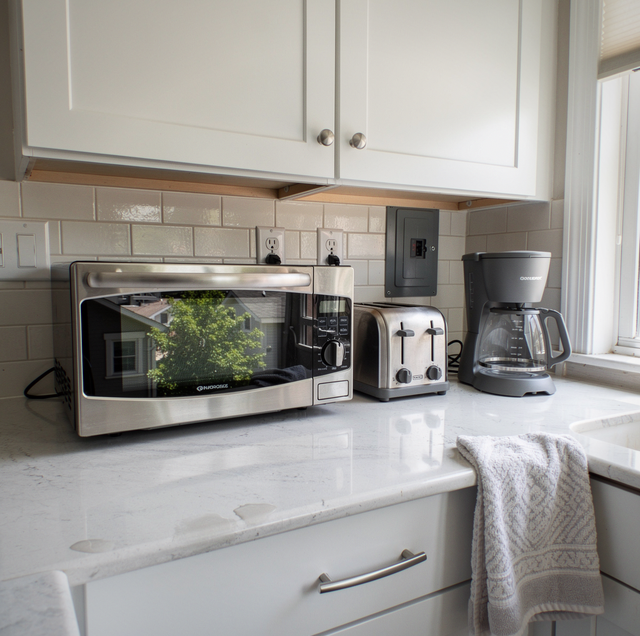
Does a microwave really need its own circuit, or is that just something electricians say to sell more work? It needs one, and the reason has nothing to do with upselling: a dedicated circuit exists because certain appliances draw enough current, for long enough, that sharing a circuit with anything else creates a real risk of nuisance tripping at best and overheated wiring at worst.
What actually makes a circuit "dedicated"? A dedicated circuit runs from a single breaker in the panel to a specific outlet or appliance, with nothing else tapped into that wire anywhere along its path. Compare that to a typical bedroom or living room circuit, which might feed six or eight outlets and a ceiling fixture from one 15-amp breaker; a dedicated circuit feeds exactly one thing.
Why does that matter if the appliance doesn't draw much power? It's not just about the appliance's own draw; it's about the combined draw of everything sharing the circuit. A 15-amp breaker trips at 15 amps, but that's not the same as a safe running load: for continuous use, the recommendation is to stay at or below 80 percent of that rating, about 12 amps, with margin to spare. A microwave alone can draw 10 to 13 amps while running, which already puts it at or just past the 12-amp continuous-load ceiling, even though it's still well under the breaker's 15-amp trip point. Put that on a circuit that also feeds a toaster, a coffee maker, and a couple of lights, and normal kitchen use crosses the line from "fine" to "tripping the breaker" the moment two appliances run at once.
The Mechanism: Why Sharing a Circuit Causes Real Problems
Every circuit is protected by a breaker sized to the wire behind it, most commonly 15 or 20 amps for general-purpose circuits. The breaker's job is to open before the wire itself gets hot enough to be a hazard. When multiple devices share a single circuit, their combined draw adds up on the same wire, and the breaker doesn't know or care which appliance is responsible; it only measures the total current.
A single high-draw appliance running alone, even one that draws 12 or 13 amps, usually stays under the breaker's 15-amp trip point, even though that draw is already at or past the recommended 12-amp continuous-load ceiling for a 15-amp circuit. The problem shows up the moment a second load joins it: a space heater and a hair dryer on the same bathroom circuit, or a microwave and a toaster on the same kitchen run. Individually, each device stays under the breaker's rated capacity. Combined, they exceed what the wire and breaker are rated to carry, and the breaker trips, doing exactly what it's supposed to do.
Dedicating a circuit removes that math entirely. If the microwave is the only thing on its circuit, its draw never has to compete with anything else, and the wire carries only what that one appliance demands.
Which Appliances Actually Need One
Microwaves: Built-in and countertop microwaves in regular use both benefit from a dedicated 20-amp circuit, since their draw during a full-power cook cycle is high enough to trip a shared circuit under normal kitchen use.
Refrigerators: A refrigerator's compressor draws a brief surge of current every time it cycles on, and a dedicated circuit means that surge, and the steady draw between cycles, never has to compete with a blender or a countertop appliance running at the same moment.
Dishwashers: Combined with a garbage disposal or another kitchen appliance on the same run, a dishwasher's heating element (used to dry and sanitize) can push a shared circuit past its rating during a normal cycle.
Electric ranges and ovens: These are 240-volt, high-amperage appliances (commonly requiring a 40- to 50-amp dedicated circuit) that were never designed to share a circuit with anything else in the first place; each appliance demands the entire circuit.
Washers and electric dryers: A washer's motor and a dryer's heating element each draw enough current, and a dryer in particular is another 240-volt appliance that is a standard candidate for its own dedicated circuit in any home built to modern wiring practice.
Window air conditioners and space heaters: Portable or window-mount units in this category draw enough continuous current that plugging one into a general-purpose circuit already feeding other loads is one of the most common sources of nuisance tripping in older homes.
EV chargers: A Level 2 EV charger is a 240-volt appliance that can draw a sustained 32 to 48 amps for hours at a time while charging, which makes a dedicated circuit sized specifically for that load a requirement, not a nice-to-have; sharing that draw with anything else isn't a workable option at that amperage.
Hot tubs and pool equipment: Like EV chargers, these are high-draw 240-volt loads that run for extended periods and are designed from the start to be wired on their own circuit with appropriate disconnects nearby.
Home office equipment: A desk running two monitors, a desktop computer, a space heater in winter, and a printer can add up to a higher continuous draw than people expect, and a dedicated circuit in a home office prevents equipment from shutting down or a breaker from tripping mid-workday.
What Happens If You Don't Dedicate the Circuit
The most common symptom of a missing dedicated circuit is a breaker that trips only when two specific appliances run together, which can take a while to diagnose because it looks random until you notice the pattern (microwave plus toaster, dryer plus something else on the same run). Beyond nuisance tripping, a circuit chronically run near or past its rated capacity generates more heat at every connection along its length, which accelerates the kind of connection wear that eventually shows up as warm outlets, discoloration, or, in worse cases, a burning smell.
Adding a Dedicated Circuit to an Existing Home
Adding a dedicated circuit means running a new wire from the panel to the appliance location and installing a new breaker sized to that circuit's load, 15 or 20 amps for most single-appliance kitchen circuits, higher and often 240-volt for ranges, dryers, and EV chargers. Whether that's a simple job or a more involved one depends mostly on the panel and the path: a panel with open breaker slots and a reasonably accessible route through a basement or attic keeps the job contained, while a full panel with no open slots may need a subpanel added first, or in some cases point toward a broader panel upgrade if the whole service is already near capacity.
Frequently Asked Questions
Check the appliance's data plate or owner's manual for its amperage or wattage rating. Anything drawing more than roughly 12 amps on a standard 120-volt circuit, or anything inherently 240-volt, like a range, dryer, or EV charger, is a strong candidate. A pattern of tripped breakers, especially when that appliance runs alongside another appliance, is also a clear practical sign.
A true dedicated circuit means its own breaker and its own wire run with nothing else tapped in anywhere along the path, not just its own outlet on a circuit that also feeds something else. Dedicating the circuit doesn't limit what plugs into that one outlet. However: a power strip or multi-outlet adapter at the dedicated outlet itself doesn't violate the rule, since the wiring back to the panel still serves only that one location. What would defeat the purpose is a second outlet or fixture spliced into the wire anywhere between the panel and the appliance, even one in a different room that looks unrelated.
Not every appliance needs a dedicated circuit; the general-purpose lighting and receptacle circuits that feed lamps, phone chargers, and low-draw electronics are designed to share a circuit without issue. Dedicating a circuit is specifically for appliances with high or sustained draw, not a blanket upgrade for every outlet in the house.
Often, if the appliance sits near an unfinished basement, crawlspace, or attic, it allows new wiring to run along joists or studs without cutting into drywall. The harder case is an appliance on an upper floor with no attic directly above it; reaching that spot can mean fishing wire through an exterior wall cavity instead, and in homes with plaster-and-lath walls rather than drywall, even a basement route sometimes still needs one small patch where the wire crosses into an interior wall. An electrician typically scopes the exact path during an initial walkthrough, which is also when you'll find out whether any wall access is unavoidable.
Yes, where applicable: a dedicated circuit for a kitchen countertop appliance, a bathroom, a garage, or an outdoor appliance still needs GFCI protection at the outlet or breaker, and many dedicated circuits in living spaces also require AFCI protection at the breaker. Dedicating the circuit and protecting it against ground faults or arcing are two separate features that work together, not substitutes for one another.
A dedicated circuit is a single wire and a single breaker feeding one appliance. A subpanel is an entirely separate, small panel, fed from the main panel, that distributes several of its own circuits. It's useful for a detached garage, a basement workshop, or an addition that needs multiple new circuits at once rather than just one.
A dedicated circuit doesn't do anything exotic. It just makes sure one wire only ever has to answer to one appliance, the way a single-lane driveway never has to negotiate who backs out first. Once you've seen a breaker trip from nothing more than a microwave and a toaster sharing a run, the case for dedicating anything that pulls real current stops sounding like a sales pitch and starts sounding like arithmetic.
Have a dedicated circuit installed for a microwave, EV charger, or any high-draw appliance — stop nuisance tripping before it starts. Rojas Electric serves Fairfax and all of Northern Virginia. Call (703) 810-3693.
