
What an Electrical Panel Upgrade Actually Involves
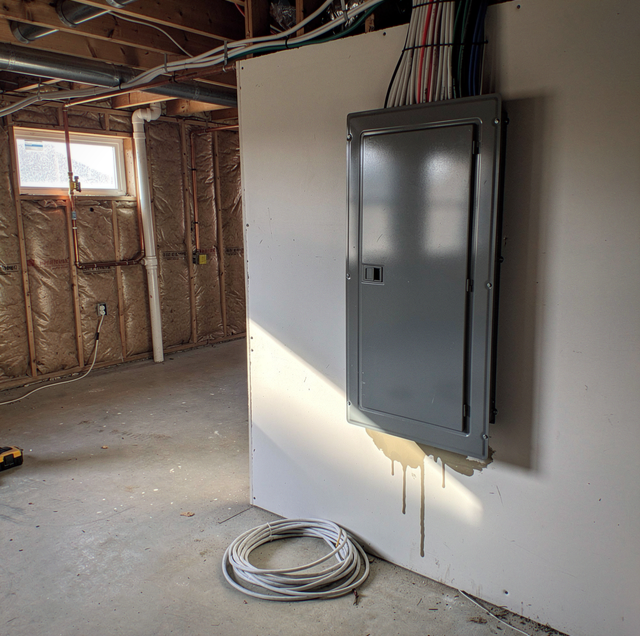
Not every call that starts with "I think I need a panel upgrade" ends with an amperage upgrade. Sometimes the fix is a single bad breaker, sometimes it's a full panel swap at the same service size, and sometimes it really is a ground-up upgrade with a utility and a county involved. Which one you're actually facing changes the timeline, the disruption, and how many outside parties get a say in the schedule, so the first real step is figuring out which of the three jobs you're looking at.
The Decision Point: Upgrade, Replace, or Just Add a Circuit
Not every panel problem calls for a full amperage upgrade. Three different jobs get lumped together in conversation, and telling them apart matters for how much disruption to expect.
Breaker or panel repair: a single failed breaker, a loose lug, or scorched bus bar connections can often be fixed without touching the service size at all. This is the smallest scope: the panel stays the same amperage, and only the damaged parts get replaced.
Panel replacement at the same amperage: an old panel with a hazard-brand breaker design, worn bus bars, or a full slate of double-tapped circuits can need a full swap even when the electrical load itself is fine. The new panel matches the existing service size but gives you sound breakers and room to add circuits later.
A true amperage upgrade: moving from a 100-amp service to 200-amp, or from 200-amp to 200-to-400-amp for a larger home, means new equipment at every stage of the path from the utility line to the breakers. This is the job with the most steps, the most coordination, and the most reason to understand the sequence before it starts.
Step One: The Load Calculation, Not a Guess
Before anyone orders equipment, a licensed electrician runs a load calculation: adding up the demand from your HVAC equipment, water heater, range, dryer, EV charger if you have one or plan one, and general lighting and receptacle circuits, then applying standard demand factors that account for the fact that not everything runs at full draw simultaneously. The result tells you whether your existing service can carry your actual household, whether it is already at capacity, or whether it has headroom you didn't know about.
This step is where a lot of guesswork gets replaced with a number. A homeowner who assumes they need 400 amps because a neighbor has it may find the calculation supports 200 amps comfortably; another homeowner planning two EV chargers and a heat pump might learn their existing 100-amp panel is already maxed out with no upgrade at all. The calculation also flags future headroom: adding a couple of open breaker slots for a heat pump or a second EV charger down the road costs far less during the original upgrade than it does as a separate project two years later.
Step Two: What Changes at the Service Entrance
A true amperage upgrade touches more than the panel itself:
The meter base: the metal enclosure where the utility meter plugs in usually needs to be sized for the new amperage, since the meter base and panel have to be rated for the same service capacity.
The service entrance conductors: the wires running from the meter base to the panel get upsized to carry the higher amperage safely; a 100-amp panel fed by 100-amp-rated conductors cannot simply have a 200-amp panel bolted underneath it.
The grounding electrode system: ground rods and the grounding electrode conductor get inspected and, in many older homes, upgraded or added to meet current safety standards, since a properly grounded system is what gives breakers and GFCI/AFCI protection a path to actually do their job.
The service mast or weatherhead, on homes with overhead service, sometimes needs replacement if it is undersized or deteriorated, since it is the physical point where the utility's wires attach to your house.
Step Three: Dominion Energy Coordination
This is the part of the process a homeowner has the least control over, and the part most often underestimated. Any change to your service amperage or meter base requires notifying and coordinating with Dominion Energy, since the utility owns the wire and transformer feeding your home and must confirm that the upstream equipment can support the new load and schedule the temporary disconnect and reconnect at the meter. In practice, this means the utility, not your electrician, controls part of the calendar: the electrician can finish the panel-side work on their own schedule, but the meter cannot go live again until Dominion completes its side. Older neighborhoods where several homes are upgrading service around the same time, common as heat pumps and EV chargers spread through a block, can see this step take longer simply because more households are in the queue at once.
Step Four: The County Permit and Inspection
A service-amperage change also requires a county electrical permit and a county inspection before the new panel is energized for good. A licensed electrician pulls the permit, schedules the inspection once the physical work is complete, and walks the inspector through the panel, grounding, and labeling. This step exists to catch mistakes before they become invisible behind a closed panel cover, and it also becomes part of the documentation trail that a future home sale or insurance question might require.
Step Five: The Actual Swap Day
On the day of the physical work, power to the home is off for a defined window, typically measured in hours rather than a full day, while the old panel is removed, the new one is mounted and wired, breakers are transferred or replaced, and every circuit is labeled. A well-run crew tests each circuit before calling the job finished, checking that GFCI and AFCI protection trips correctly and that nothing was mislabeled in the transfer. This is also the point where an electrician working inside an open panel will notice things a homeowner never sees: a bus bar with heat discoloration, a double-tapped breaker feeding two circuits off one slot, or a splice buried in the panel that should have been in a junction box. Flagging those while the panel is already open is far cheaper than opening it again for a second visit.
Comparing the Three Panel Job Types
| Breaker/Panel Repair | Panel Replacement (Same Amperage) | Full Amperage Upgrade | |
|---|---|---|---|
| What changes | Failed part(s) only | Panel box and breakers | Meter base, conductors, panel, often grounding |
| Load calculation needed | Rarely | Sometimes | Always |
| Dominion Energy coordination | No | No | Yes |
| County permit | Case by case | Yes | Yes |
| Power-off window | Usually short | Half a day, typically | Half a day to a full day, typically |
| Common trigger | A single failed breaker or hot spot | Hazard-brand panel, worn bus bars | Added heat pump, EV charger, home addition |
What Can Complicate the Timeline
A few things push a simple-sounding upgrade into a longer project. An underground service lateral, rather than overhead lines, may require trenching if the conductor size needs to change. A meter location that has to move for access or code clearance adds masonry or siding work. An older home with aluminum branch-circuit wiring feeding the panel may need those connections addressed with listed copper pigtails at the same time, since the panel work is the natural point to catch it. A finished basement or an addition built after the original panel was installed can also require rerouting circuits that were never meant to run through the space where the new panel needs to be installed. None of these are reasons to avoid the upgrade; they are reasons a good electrician walks the property before quoting a timeline rather than after.
Frequently Asked Questions
No. Power is only off during the physical swap itself, typically a matter of hours. The permit is pulled before work starts, and the county inspection occurs after the panel is installed, but it can often be scheduled so the home has temporary power restored while paperwork is pending, depending on how the inspection is sequenced with Dominion Energy's reconnection.
Usually yes, and this is one of the more common reasons homeowners upgrade proactively. A 200-amp panel installed with a few open breaker slots reserved gives you room to add a dedicated EV charger, a subpanel, or a generator interlock later without touching the service equipment again, as long as the original load calculation accounted for that future addition.
Hardwired smoke detectors with battery backup keep working on battery power during the outage, but a system without battery backup will go dark until power is restored, so it is worth confirming battery backup exists beforehand. Alarm systems and video doorbells connected to home Wi-Fi will also drop offline for the duration unless they run on their own battery or cellular backup.
Sometimes. If your main panel has spare capacity in its load calculation but is physically out of open breaker slots, a subpanel installed nearby, in a garage, basement, or addition, can add circuits without changing the main service amperage at all. A subpanel does not add capacity your main service does not already have; it just distributes existing capacity to more circuits.
Grounding relies on a grounding electrode conductor connecting the panel to ground rods driven into the earth (or another approved electrode, such as a metal water pipe with a bonding jumper). Many older homes have grounding that was adequate when installed but falls short of current standards, so a panel upgrade is often the point at which a second ground rod or an upgraded grounding conductor is added.
An inspection focuses on the permitted work: the new panel, its grounding, and its connections. An inspector who notices an unrelated hazard, exposed splices, or missing covers will typically flag it, but that flag does not usually block sign-off on the panel work itself unless the hazard is tied directly to the circuits being inspected.
A panel upgrade is really several coordinated jobs stacked into one: a calculation, a utility handoff, a county sign-off, and a physical swap, each running on its own clock. None of those clocks are optional, and the electrician who walks you through all four before the meter box ever comes off the wall is the one who has actually scoped your home, not just recited a standard job.
Schedule a load calculation and panel assessment — find out whether your home needs a repair, a same-amperage replacement, or a full service upgrade before committing to either. Rojas Electric serves Fairfax and all of Northern Virginia. Call (703) 810-3693.
